명상도서관
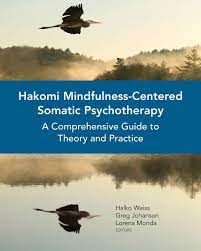
Hakomi mindfulness-centered somatic psychotherapy : a comprehensive guide to theory and practice
자세히보기
- 자료유형단행본
- 저자명Weiss, Halko,Johanson, Gregory J,Monda, Lorena
- 학회/출판사/기관명New York: W.W. Norton, 2015
- 출판년도2015
- 언어영어
- 학술지명/학위논문주기
- 발행사항
- ISBN/ISSN
- 소개/요약Hakomi Mindfulness-Centered Somatic Psychotherapy: A Comprehensive Guide to Theory and Practice Halko Weiss, Greg Johanson, and Lorena Monda, editors 2015, W.W. Norton, 412 pages, ISBN: 978-0-393-71072-4 Price: 32.30 euros Word Count: 1,357 The new Hakomi book, Hakomi Mindfulness-Centered Somatic Psychotherapy: A Comprehensive Guide to Theory and Practice, breaks new ground in the field of Body Psychotherapy (BP), and deserves a close read. It is written by a consortium of Hakomi practitioners and trainers, most of who were students of Ron Kurtz, Hakomi’s founder. Its editors, Halko Weiss, Greg Johanson, and Lorena Monda, are long-term Hakomi trainers. To witness such a broad spectrum of first generation students of a founder band together to both honor and extend his work is inspiring and encouraging for our field. In addition it represents, along with Pat Ogden and Michael Heller , one of the few BP texts that is extensively referenced, possesses a substantial index and extremely useful appendices, and locates itself within a broad spectrum of current theory and practice in multiple fields, such as attachment theory, Buddhist psychology, neuroscience, object relations, and self psychology, to name a few. One finishes this book with two main appreciations; that in describing Kurtz’s ideas the authors situated them in both a larger historical context and a larger frame in the fields of psychotherapy, philosophy, and science. As well, appreciation is due for the dedicated scholarship this kind of careful investigation of ones work entails. This comprehensive examination of the Hakomi form parallels the values of the modality itself, and represents a great gift, both to Hakomi practitioners and to anyone in the field of body-centered psychotherapy. The task of bringing so many authors together to both sing solos as well as create a choir can be daunting, and the editors are to be commended for their ability to orchestrate such a coherent voice in the book. Each chapter builds on the next, and adds in the next piece of theory or practice in a graceful way. The writing is clear, well organized (both within chapters and across them), and articulate. Almost every author takes the time to discuss different models of therapeutic change and map Hakomi onto them, so that the reader learns more than just this form, but feels immersed in the field itself. Hakomi proudly asserts itself as an integrative form, one that can be adapted and applied creatively. Extensive session transcripts, sprinkled throughout the book, help the reader get an experiential as well as theoretical sense of the work. True to its name, this book helps us understand where Hakomi stands in relation to many realms. When one finishes this book, one gets the sense that Hakomi is a vibrant, evolving, and creative discipline, one that knows who it is, where it came from, and where it wants to go. The essence of Hakomi might be said to involve characterological transformation through assisted self-study in a state of mindfulness. Honoring both psychological and spiritual levels of human experience, Hakomi wants to help clients access ‘core organizers’, defined as unconscious models of reality, and by studying them in a non-judgmental way, through the direct experiences of the body, these core beliefs and habits can be challenged rather than fixed. Hakomi asserts that core beliefs are expanded by new experiences, and that change happens through experience rather than reflection. The method first establishes mindfulness, and then adds experiments suggested by the therapist that trigger reactions in the mindful client. These reactions surface barriers to nourishing states. To accomplish this, the therapist reads the clients body to get clues about their formative experiences, as a way to suggest experiments rather than diagnose. The method moves away from an emphasis on experiencing painful emotions, and instead stresses an increased tolerance of positive states. The book repeatedly and descriptively asserts that it centralizes the body, and it is largely successful in that assertion. However, it does (rather unconsciously) locate itself within a particular branch of the body-centered family tree - one that extensively uses sensory awareness, and focuses much less on expressive movement or breath. It does an excellent job locating itself in the BP family tree in terms of its use of character theory, and the reader will be well served by reading the chapters devoted to this topic as a way to understand that whole large branch of the BP family tree. The book rather oddly reveals that both Kurtz and Lowen abandoned character theory late in their lives, and calls them ‘somewhat disingenuous’ for doing so, claiming that they could afford to do so because they had internalized it. Perhaps one could suggest a mindfulness experiment about that particular belief. It may actually be disingenuous for the book to assert that the Hakomi therapist ‘interprets’ similarly to analysts, but then claim that it only does so to suggest experiments rather than share the interpretations. Interpretations are interpretations, and likely have similar impacts on the client whether they are shared directly or indirectly. One of the many strengths of this book is the careful and thorough way it spells out its theory and practice. From Hakomi’s foundational principles – unity, organicity, mind/body holism, mindfulness and non-violence – to its excellent work describing the nature of the therapeutic relationship in this method (check out the section on the therapist as a ‘magical stranger’), the book very generously reveals to the reader all the components of how it is organized and practiced, so much so that other modalities would benefit from using this book as a springboard for their own articulation of who they are and what they do. For instance, there are several dedicated chapters on specific clinical interventions (such as tracking, contact, taking over) complete with transcripts that illustrate how they occur in sessions. As well, the book includes a chapter on ethics, one on indications and contraindications, and a brilliant appendix on Hakomi’s historical context and research. Hakomi sees itself as an optimistic therapy, and makes a very credible case for how and why optimism works. While it may be a bit overly optimistic about how resistance works (ex: a genuine, authentic therapeutic relationship doesn’t give the client anything to resist), it deeply embodies a humanistic and client-centered view of the world, a view that centralizes the development of an inner witness via embodied mindfulness. At the same time it also bravely questions itself and other modalities in terms of the harm that can occur from an overly nurturing therapist. The book does leave a few things out, as do many of the books in our field. It doesn’t mention any applications to group or community work, and it doesn’t take on the important topic of diversity issues and how to work with marginalized clients living within oppressive social systems. To completely locate problems within the organization of the psyche of an individual belies the daily realities of poverty, war, racism, homophobia, and oppression that many people experience. Our field was brought into being by mostly straight, White, cisgender, middle class Westerners, practicing on the same. It largely continues to look at the world through that lens. When relating to this particular book, however, the reader is left with a feeling that Hakomi is poised to be a substantial contributor to the field’s development in this area, largely due to its ability to self-reflect on its own locations. Hakomi Mindfulness-Centered Somatic Psychotherapy is a must-read for any serious practitioner in our field, and can be a highly recommended text for many related fields. Its candor, clarity, and heart are revealed on each page, especially in the midst of its rigorous scholarship and acknowledgement of other leaders and influences. Its generosity and coherency is a model for how this field can evolve and thrive in sustainable and contributive ways. Christine Caldwell, PhD, LPC, NCC, ACS, BC-DMT Naropa University Caldwell@naropa.edu
TOP





 사전신청
사전신청 오시는길
오시는길 명상챗봇
명상챗봇